
In January 2025, when American users thought TikTok might go dark, a few hundred thousand of them downloaded a Chinese app called Xiaohongshu, mangled the name, and started calling it RedNote. The "TikTok refugee" wave made headlines, the app shot to the top of the US App Store, and creators asked the obvious next question: can I get paid here?
Yes, but probably not the way you're picturing. RedNote won't quietly deposit money in your account for racking up views. The money that reaches a non-Chinese creator comes almost entirely from brands paying you directly, not from the platform. Once you see that distinction, the whole "is it worth it" question gets a lot clearer.
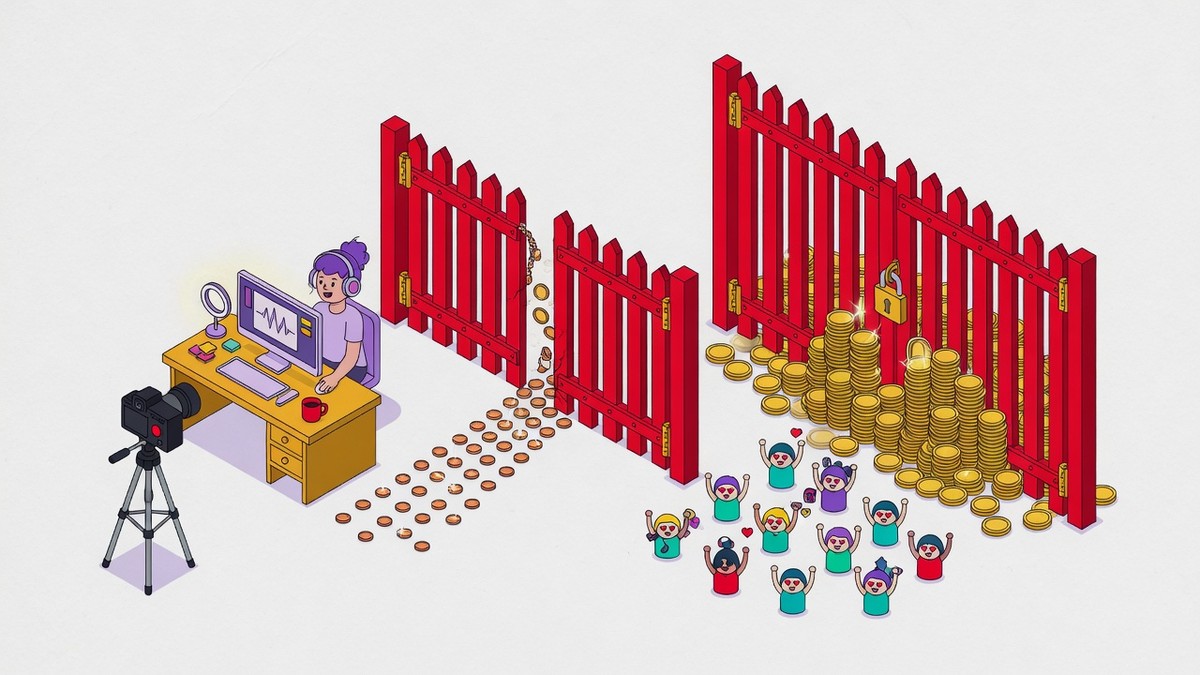
The thing most TikTok refugees get wrong about RedNoteRedNote pays foreign creators the way Instagram does: through brand deals, not a creator fund. The native payout machine is mostly built for people with a China footprint.
What RedNote actually is
Xiaohongshu, which translates to "Little Red Book," is a lifestyle and social-commerce platform with 200M+ monthly active users, heavy on beauty, fashion, travel, and food. Think Pinterest and Instagram fused with a shopping cart. Unlike most Western social apps, discovery runs through search: people open RedNote to look something up the way they'd Google it, which is great news if your content answers a specific question.
The platform lists itself as open to international creators, and that part is genuine. You can register with a phone number from most countries and start posting. Western competition is still thin, and the algorithm rewards original, useful content over raw follower count. That's the upside, and it's real.
The four ways money moves here
There are roughly four income streams on RedNote, and they're not equally reachable if you're sitting outside China. The whole story fits in one table.
| Income stream | How it works | Reachable for a non-Chinese creator? |
|---|---|---|
| Brand / sponsored posts | Brands pay you to feature products, via the Dandelion marketplace or direct deals | Yes, this is your main lane |
| Affiliate commissions | Earn a cut on products you recommend | Yes, with some setup |
| Native Creator Fund | Platform pays for high-performing content | Mostly gated; needs Chinese verification, and it's small |
| E-commerce storefront | Sell your own products in-app | Largely blocked; built for China-registered businesses |
The top two are open to you. The bottom two are where the wall is, and the wall is the reason the headline numbers mislead people.
Why the native payouts are gated
Here's the part nobody puts in the breathless "RedNote is the new TikTok" posts. The native Creator Fund, the live-stream tipping (those "red envelopes"), and the e-commerce storefront all lean on infrastructure a foreign creator usually doesn't have: Chinese real-name verification and a Chinese payout rail. International users can pay into the app through Alipay with a linked card, but getting money out as a creator is where it breaks down.
The storefront is the starkest example. Personal e-commerce stores are generally restricted to local Chinese citizens, and an overseas brand store requires Chinese business registration, a verified "Blue V" professional account, and deposits that, by agency estimates, run roughly $3,500–$8,000 depending on your category. That's not a casual creator setup. That's a company expanding into China.
As for the Creator Fund itself: by third-party agency estimates it kicks in around 10,000 followers and roughly 50,000 views a month, and even then a 50K-follower creator might see a few hundred dollars from it. Useful, not life-changing, and gated behind verification most foreign creators skip.
What RedNote's listed range covers, and who actually hits it
See the RedNote program detailsSo who should actually bother
I'd split it cleanly. RedNote is worth real effort if you already have something to sell or promote: your own product, a service, affiliate offers, or the kind of niche (beauty, fashion, travel, lifestyle) where brands in the China-adjacent market will pay for an authentic Western voice. The audience is huge, search-driven, and not yet crowded with people who look like you. That's a genuine opening.
It's a weaker bet if your plan is "post and get paid for views." That channel exists, but for a foreigner it's small and gated, and you'll burn more energy clearing verification hoops than you'll earn. If a creator fund is what you want, a platform built for your payout rail will treat you better.
One 2026 wrinkle: new MCN registration rules take effect September 1, and creators posting in regulated topics (finance, health, law, education, science) now need approved qualifications. If your niche is lifestyle, none of that touches you. If it's financial advice, read the fine print first.
What this means for you
If the TikTok-refugee wave brought you here, treat RedNote as a discovery and brand-deal engine, not an ATM. Build a tight niche, lean into search-friendly posts, disclose sponsorships properly, and let brand partnerships and affiliate links carry the income.
Before you pour months into any one platform, check what your specific audience could actually pay across the field. The calculator estimates that and keeps you honest about whether RedNote fits your numbers:
If RedNote's gates frustrate you, Lemon8 is its closest sibling: another lifestyle-first app (ByteDance's, this time) with paid creator programs and an algorithm that's kind to newcomers, though it's invite-based. And if you're still mapping how these things differ, creator fund vs creator program untangles why "the platform pays you" and "you get paid through the platform" are not the same promise, which is exactly the trap RedNote sets. For the TikTok comparison that probably brought you here, how much TikTok pays creators is the honest version of that math.
So is RedNote monetization worth it for a non-Chinese creator in 2026? If you sell or you can land brand deals, yes, and you're early. If you just want a fund to pay you for views, look elsewhere, because the door you want is the one with the Chinese-verification lock on it.
Brand deals, yes. Native fund, mostly not. See which RedNote stream is open to you.
The full breakdown of RedNote's payout streams, what's gated behind Chinese verification, and the realistic numbers for an international creator, verified on Gemlist.
Check the RedNote program detailsFrequently asked questions
Can non-Chinese creators actually make money on RedNote in 2026?
Yes, but not the way most people assume. The reachable income for an international creator is brand and sponsored deals plus affiliate commissions, not the native in-app Creator Fund. The fund payouts, the e-commerce storefront, and live-stream tips all lean on Chinese real-name verification and a Chinese payout rail, which most foreign creators don't have. So you can earn, but the money tends to come from brands paying you directly rather than from RedNote paying you. The platform itself lists the program as open to international creators, and its own payout range runs $500–$10,000/month for established commerce-and-brand creators, not beginners.
Do you need followers to monetize on Xiaohongshu?
There's no published follower minimum to open an account or post, and Gemlist lists no minimum to join. But the native Creator Fund, by third-party agency estimates, kicks in around 10,000 followers and a view threshold (roughly 50,000 views a month), and even then it's small, on the order of a few hundred dollars a month. Brand deals don't need a huge following so much as a tight niche and real engagement; mid-tier creators reportedly charge $500–$2,000 per sponsored post. Starting is open. Earning meaningfully still takes an audience.
Why can't foreigners open an e-commerce shop on RedNote?
Personal e-commerce stores on Xiaohongshu are generally restricted to local Chinese citizens, and overseas brand stores require Chinese business registration, a verified 'Blue V' professional account, and deposits that run roughly $3,500–$8,000 depending on category, by agency estimates. That's the single biggest gate between an international creator and RedNote's most lucrative income stream. You can still earn from brand partnerships and affiliate links without a storefront, but selling your own products in-app is built for entities with a China business footprint.
How much can a Western creator realistically earn on RedNote?
Realistically, less than the headline range suggests in your first months. Gemlist lists $100–$500/month for beginners, $500–$3,000 for mid-tier, and $3,000–$10,000+ for top creators, but those upper bands assume commerce and steady brand deals, which favor creators with a China-facing audience or strong niche pull. For a non-Chinese creator without a storefront, the practical path is a handful of sponsored posts and affiliate commissions, which is real money but uneven. Treat the $10K ceiling as a listed top tier, not a forecast.
Is RedNote monetization worth it in 2026 for an international creator?
It's worth it if you already sell something (your own product, a service, or affiliate offers) or you can land brand deals in beauty, fashion, travel, or lifestyle, because the audience is large and Western competition is still thin. It's a weaker bet if you're hoping the platform will simply pay you for views the way a creator fund does, since that channel is gated and small for foreigners. I'd treat RedNote as a discovery and brand-deal engine first, and a direct-payout platform a distant second.
More from Gemlist
How Many Watch Hours to Monetize YouTube in 2026
How many watch hours to monetize YouTube in 2026: 4,000 valid public hours in 12 months plus 1,000 subs for ad revenue, or 3,000 hours at 500 subs for fan funding.

Creator Monetization Platforms 2026: Complete Guide by Category
How do creators make money in 2026? This guide covers 69 verified creator programs across 9 categories — video, streaming, music, gaming, writing, newsletter, beauty, education, and AI tools — with real payout rates and entry requirements.

How Much Does Ream Stories Take? Author Fees & Payouts (2026)
How much does Ream Stories take from authors? A flat 10% platform fee plus standard card processing (~2.9% + $0.30). Free to start. Here's the real math.