
Twitch pays $2.50 per Tier 1 subscriber (50% of the $4.99 price). YouTube pays 55% of ad revenue — about $1–$5 RPM — from your first day in the YouTube Partner Program. Those two numbers define the comparison: Twitch's income is subscriber-dependent, YouTube's is view-dependent.
Here's the part most comparisons skip: Twitch Affiliates earn zero from ads. Ad revenue on Twitch only flows to Partners, which requires sustained growth at 75+ average concurrent viewers before Twitch invites you. A small channel on Twitch earns only what viewers voluntarily subscribe and Bit-cheer. A small channel on YouTube earns from every ad-monetized view, whether viewers pay anything or not.
That changes which platform pays better depending on your stage.
The subscription vs ad revenue split — the core difference
The way each platform monetizes you is structurally different, and that gap matters more than the split percentages alone.
Twitch is subscription-first. Revenue comes from viewers who choose to pay — Tier 1 subs ($2.50/month to you), Tier 2 ($5.00), Tier 3 ($12.50), Bits ($0.01/Bit), and Prime Gaming subs (viewers with Amazon Prime can give one free sub per month). None of this requires viewers to watch ads. None of it flows unless someone actively subscribes or cheers. Twitch Affiliates also don't earn ad revenue at all — that only switches on after reaching Partner.
YouTube is ad-first. YouTube runs ads on every eligible video for every YPP member, and pays 55% of long-form ad revenue from the first qualified view. You don't need viewers to pay you directly — their time is enough. On Shorts, the split is 45%. Super Chats and channel memberships are available too, but the baseline income comes from views.
| Twitch | YouTube | |
|---|---|---|
| Primary revenue | Subscriptions + Bits | Ad revenue (55% long-form, 45% Shorts) |
| Revenue model | Voluntary viewer payment | View-based advertising |
| Tier 1 sub → creator | $2.50/month | N/A (no platform sub equivalent) |
| Typical RPM | $2–$10 (Partners only) | $1–$5 typical; $6–$30 in high-CPM niches |
| Affiliates earn from ads? | No | Yes (from day 1 of YPP) |
| Channel memberships | Yes | Yes |
| Minimum payout threshold | $100 | ~$100 |
| Simulcasting penalty | None | None |
The ad revenue gap for small streamers
This is the practical issue: at small scale, YouTube's model typically wins.
A Twitch Affiliate with 20 average concurrent viewers and 10 subscribers earns $25/month from subs, plus whatever Bits come in. Their Twitch ad impression count is irrelevant — Affiliates don't receive ad revenue.
A YouTube creator with a similar audience — say, 200 average live viewers and 2,000 video views/month from VODs — earns from every ad view at 55% of CPM. At a $3 RPM, that's around $6/month from views alone, which sounds small. But if their VODs are clipped, uploaded, and generate search views, total monthly views might be 10,000–50,000. At $3 RPM, that's $30–$150/month from ads with no subscribers required.
Twitch's live-only model means the only income is in the room during the stream. YouTube's VOD and search discovery means income continues after the show ends.
Entry requirements: which is easier to unlock?
Twitch Affiliate requires four things simultaneously, all measured over the last 30 days:
- 50 followers
- 3 average concurrent viewers
- 500 total minutes broadcast
- 7 unique broadcast days
Hit all four at the same time and Twitch automatically sends you an invite. No application, no waiting — just meet the numbers and you're in.
YouTube Partner Program requires 1,000 subscribers and either 4,000 valid public watch hours in the last 12 months or 10 million valid public Shorts views in the last 90 days. You then apply and wait for approval (typically a few weeks). YouTube also has an earlier tier that unlocks fan funding features (Super Chats and memberships) at 500 subscribers with lower watch thresholds — but that tier doesn't include ad revenue.
Twitch Affiliate unlocks faster. A new streamer can hit 50 followers and 3 concurrent viewers in a few weeks with consistent streaming. YouTube's 1,000-subscriber bar and 4,000-hour watch threshold takes most channels months to clear.
That said: once unlocked, YouTube's income continues from VODs and search traffic even when you're offline. Twitch income only flows during and immediately after live sessions (via delayed sub notifications).
Platform discovery: where viewers find you
Twitch discovery happens through game and category browsing. Viewers open Twitch, pick a game, and browse live channels — usually sorted by viewer count, which means small channels appear at the bottom. Organic discovery from category browsing is harder the smaller you are, because you compete directly against established streamers for the same viewer pool at that moment. Twitch's recommended feed and community-driven sub-gifting help somewhat, but live competition for a fixed pool of current viewers is the structural challenge.
YouTube is a search engine and recommendation engine simultaneously. A stream uploaded as a VOD can surface in search results months later. Clips and highlights get distributed in recommended feeds. A streamer with 30 average live viewers can generate 50,000 VOD views per month through search and recommendations. Discovery on YouTube isn't purely tied to how many people are watching you live right now — your existing content keeps working for you.
This is why the same creator at the same stage often builds an audience faster on YouTube: the content accumulates rather than disappearing when the stream ends.
The simulcasting option
Neither Twitch nor YouTube prohibits simultaneous streaming to both platforms. You can go live on Twitch and YouTube at once and earn on both: subs and Bits on Twitch, ad views on YouTube. This is a common approach, particularly for creators whose live audience prefers Twitch's chat culture but who want YouTube's search and VOD distribution.
This differs from Kick's setup, where multistreaming drops your subscription revenue from 95% to 50%. On Twitch and YouTube, the split stays the same whether you're exclusive or not.
Which one actually wins?
The answer depends on your audience and your stage.
For small streamers (under 50 average concurrent viewers), YouTube's ad revenue model tends to pay more in total platform income, because Twitch Affiliates earn zero from ads. You need viewers to voluntarily subscribe on Twitch; you just need views on YouTube.
For subscription-focused streamers with an established audience, Twitch's $2.50/sub model is reliable and direct. 500 paying subscribers = $1,250/month from subs, regardless of how many views you have. YouTube's equivalent (channel memberships) follows a similar split but is harder to drive in practice because YouTube's culture leans toward ad-supported content rather than membership payments.
For discoverability, YouTube is more powerful: VODs, search, recommendations, and clips all compound over time. Twitch's live-first model means audience-building requires sustained live presence without the search and VOD tailwinds YouTube provides.
- Best for
- Pay model
- Access
For Twitch's full breakdown — subs, Bits, ad RPM, and the Partner Plus 70/30 deal — see How Much Does Twitch Pay Streamers in 2026. For the head-to-head against Kick (the platform that does pay 95/5 on subs), see Kick vs Twitch: Which Pays Streamers More. For a broader look at which video platform pays creators most across all formats (not just streaming), see Best Video Platform for Creators in 2026.
Frequently asked questions
Does Twitch or YouTube pay more per subscriber?
Twitch pays $2.50 per Tier 1 subscriber (50% of the $4.99 sub price). YouTube doesn't pay per subscriber at all — subscriber count isn't a direct income lever. YouTube's income comes from ad revenue (55% of ads on long-form, 45% on Shorts), Super Chats, and channel memberships. For subscription-specific income, Twitch's model is more direct; for ad income, YouTube is more favorable — especially for small streamers who earn nothing from Twitch ads until they reach Partner status.
What are the requirements for Twitch Affiliate vs YouTube Partner Program?
Twitch Affiliate requires 50 followers, 3 average concurrent viewers over 30 days, 500 total minutes broadcast in the last 30 days, and 7 unique broadcast days in the last 30 days — all four simultaneously. YouTube Partner Program requires 1,000 subscribers and either 4,000 valid public watch hours in the last 12 months or 10 million valid public Shorts views in the last 90 days. Twitch Affiliate is easier to unlock faster; YouTube YPP requires sustained growth over a longer window.
Can you stream on both Twitch and YouTube at the same time?
Yes. Neither Twitch nor YouTube requires platform exclusivity. You can stream simultaneously to both platforms (multistreaming) without revenue penalties on either. This differs from Kick, where multistreaming drops your subscription revenue from 95% to 50%. Streaming on both Twitch and YouTube at once is a common strategy — many creators use one as their primary home and treat the other as VOD content that gets clipped and uploaded after the live show.
Does Twitch pay for ads the same way YouTube does?
No — and this is the most misunderstood difference. YouTube runs ads for every YPP member from day one, paying 55% of long-form ad revenue regardless of channel size. Twitch only pays ad revenue to Partners and Partners Plus — Affiliates earn nothing from ads. A Twitch Affiliate's entire platform income comes from subscriptions and Bits. This means small streamers with YPP are often better compensated than similarly-sized Twitch Affiliates, who are solely dependent on whether viewers subscribe.
Is Twitch or YouTube better for small streamers?
YouTube is often better for small streamers financially, for one reason: YouTube monetizes every qualified view for YPP members; Twitch only monetizes Affiliates' subscriptions and Bits (ads come later at Partner). A streamer with 20 average concurrent viewers earning $1–$5 RPM on YouTube can generate meaningful income from views. The same streamer on Twitch only earns from whatever subscribers choose to pay. That said, Twitch's discoverability via game browsing can be more accessible for live streaming audience growth.
More from Gemlist
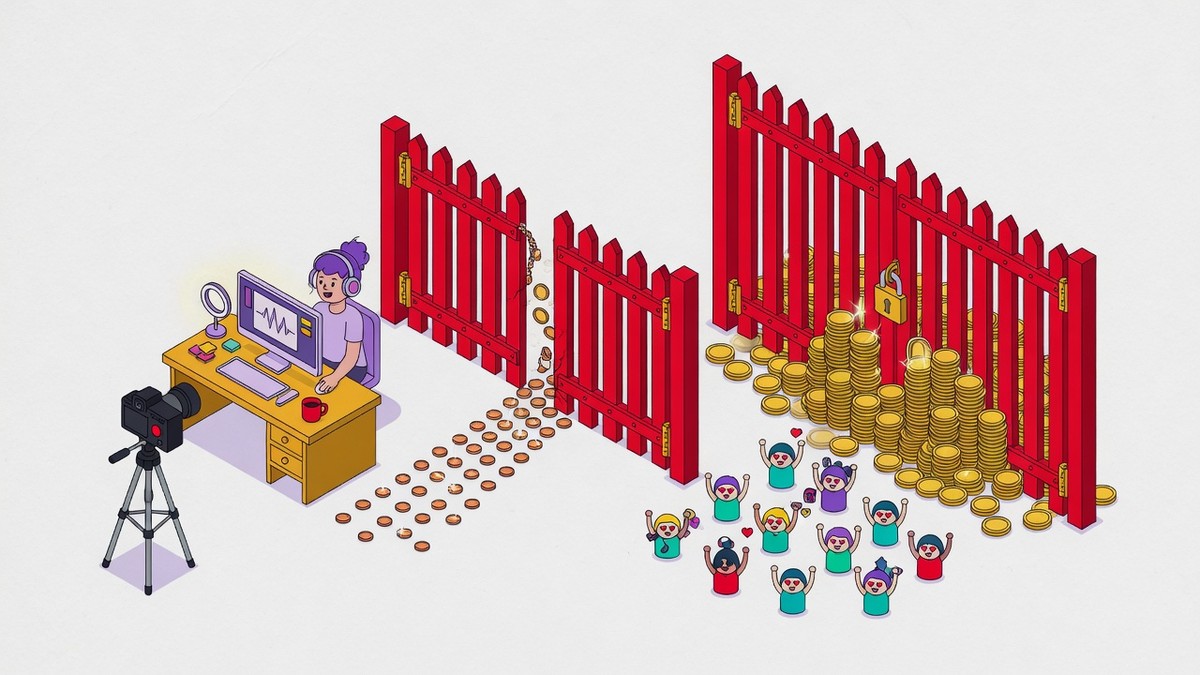
How Many Watch Hours to Monetize YouTube in 2026
How many watch hours to monetize YouTube in 2026: 4,000 valid public hours in 12 months plus 1,000 subs for ad revenue, or 3,000 hours at 500 subs for fan funding.
Spotify Partner Program Requirements 2026: Who Actually Qualifies
Spotify Partner Program requirements 2026: 3 episodes, 2,000 consumption hours, and 1,000 audience count in 30 days. Spotify cut the bar ~80% in January. Full breakdown.

Which Creator Programs Pay the Fastest? Instant, Weekly & Monthly Payout Guide (2026)
Ko-fi pays instantly. UnitedMasters SELECT pays daily. Fanfix pays weekly. YouTube pays monthly. Here's the complete 2026 guide to creator program payout speeds — verified, side-by-side.