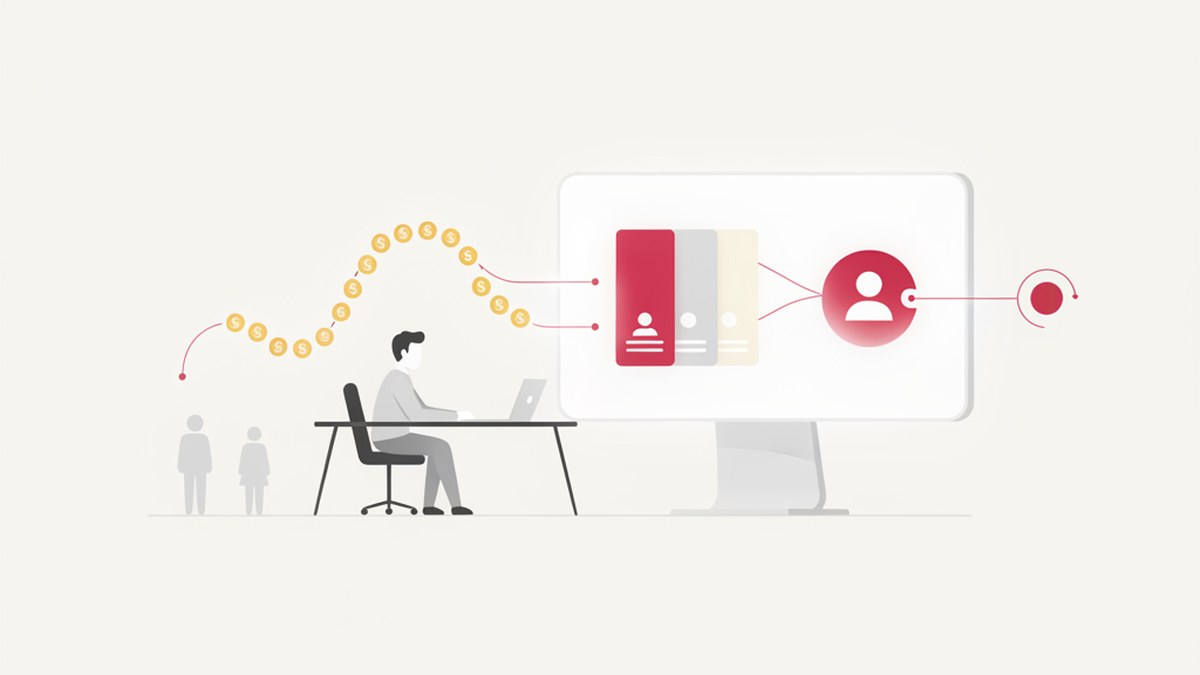
Patreon takes 10% of what you earn if you signed up after August 4, 2025, so you keep about 90% before payment processing and payout fees. Legacy creators are still on the old tiered plans: 5% (Lite), 8% (Pro), or 12% (Premium).
That's the clean answer, but the platform fee is only part of the picture. Payment processing fees, payout fees, currency conversion, and applicable taxes all come out on top of Patreon's cut. Your actual deposit lands somewhere below 90%, and how far below depends on your payout method, your patrons' countries, and whether any currency conversion applies. Knowing that changes how you price your tiers.
The 10% flat fee for new creators
On August 4, 2025, Patreon moved all new accounts to a single 10% platform fee. No plan tiers, no feature trade-offs, no upfront cost. Sign up, build your page, and Patreon takes 10 cents on every dollar before the other deductions apply.
It's a simpler model than what existed before. Under the old system, creators chose a plan that set both their fee and their feature access. A lower fee meant fewer tools; more features meant paying a higher percentage. The new 10% structure removes that trade-off for anyone joining now: you get access to the full platform regardless.
What you get for that 10% is everything Patreon offers. Membership tiers, monthly and annual subscriptions, one-time payments, a built-in publishing space for audio, video, text, and livestreams, email newsletters, community chats, analytics, and Patreon's payment infrastructure including fraud handling and tax collection in required markets. It's not a single payment button sitting on top of your existing site; it's a full membership platform.
Legacy creators: Lite, Pro, Premium
Anyone who signed up before August 4, 2025, is still on their original plan. The three legacy tiers are:
- Lite at 5%: the lowest fee, historically paired with a more limited feature set.
- Pro at 8%: the most common plan, with full access to membership tiers, analytics, and promotional tools.
- Premium at 12%: the highest fee, aimed at established creators who wanted dedicated account support.
That 12% on Premium is worth noting. Legacy Premium creators are paying more per dollar earned than any new creator does today under the 10% flat structure. If you're on Premium and doing meaningful volume, the fee gap adds up.
Patreon hasn't announced a migration plan to move legacy accounts to the new structure. If you're on an older plan, you stay there for now.
Want the complete Patreon fee structure, requirements, and what's verified?
See the full Patreon Creator breakdownThe fees most people forget
The platform fee is the number Patreon leads with. The fees that follow it are less visible but very real.
Payment processing fees apply to every transaction. The exact rate depends on the payment method, the patron's country, and the currency. Patreon doesn't publish a single universal processing rate because it varies across markets and card networks. What you can count on: it's a real deduction on top of the 10%.
Payout fees apply when you withdraw. These vary by payout method (PayPal, direct deposit, wire transfer) and your country. International wire transfers typically cost more than domestic direct deposit.
Currency conversion applies when patrons pay in a currency that's different from your payout currency. A creator in India with patrons paying in US dollars, or a US creator with European patrons paying in euros, will see a conversion cost somewhere in the chain.
Taxes. Patreon handles VAT, GST, and similar consumption taxes in markets where it's required to do so. Those amounts come out before your earnings figure.
The combined effect: "creators keep 90%" is accurate for the platform fee alone. Your actual take-home is something below that, and by how much depends on your specific situation. Patreon does publish its current processing rates on its pricing page, so run the numbers for your payout method and region before you set your tier prices.
Free to start, no gating
Patreon has no follower minimum. No approval process. Creating an account and setting up a page is free, and you don't pay anything until patrons actually start paying you.
That's a real difference from platforms like TikTok's Creator Rewards Program (which requires 10,000 followers and 100,000 views in the last 30 days) or the Spotify Partner Program (2,000 consumption hours plus 1,000 audience count). Patreon's barrier isn't a follower count or an algorithm threshold. The barrier is whether anyone in your existing audience will pay.
That framing matters. Patreon is not a discovery engine. The platform doesn't route new people to your page the way YouTube's algorithm surfaces videos or TikTok's For You Page pushes content. You bring the audience. Patreon provides the infrastructure to charge them.
This makes Patreon genuinely accessible for a creator with even a small loyal following. Fifty patrons at $5 a month is $250 before fees. That's not a life-changing number, but it's real money that requires no follower count approval from anyone.
How creators earn on Patreon
The income model has three forms.
Monthly subscriptions are the core. Patrons pick a tier and pay a recurring monthly charge. You earn that income as long as they stay.
Annual subscriptions let patrons commit for a full year at once, typically at a small discount versus paying month-to-month. Creators get a larger upfront deposit; patrons pay less overall.
One-time payments let someone support you with a single charge rather than a recurring commitment. Useful for crowdfunding a specific project or for fans who want to contribute without locking into a subscription.
All three routes sit inside Patreon's membership infrastructure, which means the platform handles the payment processing, the billing, and the chargeback and fraud management. You focus on delivering whatever benefits you've promised to each tier.
What Patreon creators actually make
Patreon doesn't publish earnings data, and our database marks individual earnings as COULDNT_CONFIRM because no reliable official figure exists. This is worth being straight about.
Independent tracking through sites like Graphtreon, which indexes creators who make their patron counts visible, shows a highly uneven distribution. A small number of creators with large, committed audiences earn thousands of dollars a month. Most active pages earn considerably less. That pattern is common across fan-funding platforms generally.
The math on Patreon income is direct in a way that's different from platform-pool programs. There's no ad revenue being divided among creators by an algorithm. You charge your audience, and your income is the total of what your patrons pay. Two hundred patrons at $10 a tier is $2,000 before fees. One hundred patrons at $5 is $500. The scale question is how many people from your existing audience will pay, and at what amount.
The general pattern in the creator economy is that Patreon income rewards audience loyalty more than audience size. A smaller group of genuinely committed followers tends to out-earn a large, passive one. That's why the platform has historically worked well for podcast hosts, writers, independent journalists, musicians, and educators who have built real relationships with their audiences.
If you want to estimate what your specific audience size and tier pricing would generate after fees, the calculator puts real numbers on it:
Who it's for, and the actual catch
Patreon is worth taking seriously if you have an audience that already follows your work and trusts you enough to pay for it. Podcast listeners, newsletter readers, YouTube subscribers with high comment engagement, independent musicians with a committed fanbase: these are the situations where Patreon has worked well over time.
It's a harder choice as a first move if nobody knows you yet. The platform won't deliver patrons to your page. It's the monetization layer, not the discovery mechanism. If your plan is to open a Patreon and see what happens without bringing an existing audience to it, the most likely result is nothing. Build the audience first.
The actual catch: the 10% is the number Patreon leads with, but it's not the number you'll feel. Payment processing and payout costs mean the real percentage coming out of each transaction is higher. That's not hidden, but it's also not front-and-center. Account for it when you set your tier prices, rather than discovering it later when your payout lands lower than expected.
For creators already earning on another platform who are thinking about switching: Substack's Creator Accelerator Fund guarantees your first-year revenue if you're migrating from Patreon with at least $2,000 MRR, which makes it worth understanding before you commit. Broadly, there are more options in the fan-funding and membership space than Patreon alone: Ko-fi runs at 0% on tips and 5% on memberships for free-plan creators. Medium's Partner Program works differently, paying on member reading time rather than subscriptions. More of the social creator programs worth comparing are in one place if you want to see the full field.
For a longer look at whether Patreon is the right starting point versus building a newsletter first, can anyone start a Substack and can you monetize Medium cover the two most common alternatives.
- Best for
- Creators with an existing loyal audience who want recurring membership income without platform gatekeeping or follower minimums
- Pay model
- Creator keeps ~90% before other fees (Patreon platform fee: 10% flat for new accounts post-Aug 4 2025; legacy: 5% Lite / 8% Pro / 12% Premium). Earnings vary entirely by audience size and tier pricing — Patreon does not publish typical per-creator figures (COULDNT_CONFIRM).
- Access
- Open to all — free to create a page, no follower minimum, no approval required
Patreon's fee structure is genuinely reasonable for what you get, and the 10% flat model is cleaner than the old plan-tier system. The catch is the one that's easy to miss: the platform fee is not the only fee, and your effective payout percentage is lower than 90% once processing costs, payout fees, and currency costs are applied. Beyond the fees, the bigger constraint is that Patreon brings nothing in terms of audience discovery. It's a membership infrastructure layer, not a platform that routes new people to your work. If you have an audience already, it's worth setting up. If you're starting from zero and hoping Patreon solves the audience problem, it won't.
Full Patreon fee breakdown, requirements, and what's verified
The complete Patreon Creator listing on Gemlist: fee structure for new and legacy creators, what the extra costs are beyond the 10%, how the income model works, and how it compares to Ko-fi, Substack, and other fan-funding options.
See the Patreon Creator breakdown on GemlistFrequently asked questions
How much does Patreon take from creators?
Patreon takes 10% of creator earnings for anyone who signed up after August 4, 2025. Legacy creators are on the old tiered plans: 5% (Lite), 8% (Pro), or 12% (Premium). On top of the platform fee, Patreon also deducts payment processing fees, payout fees, currency conversion where applicable, and taxes in markets where required. The 10% is just the platform cut; your actual take-home is lower than 90% once everything else is factored in.
How much do you actually keep on Patreon in 2026?
New creators (signed up after August 4, 2025) keep approximately 90% of what they earn after the 10% Patreon platform fee. But payment processing fees, payout fees, currency conversion charges, and applicable taxes come on top of that. The exact effective take-home depends on your payout method, your country, and your patrons' countries. Legacy creators on Lite keep 95%, on Pro keep 92%, and on Premium keep 88%, again before the extra fees.
Is Patreon free to start?
Yes. Creating a Patreon account and setting up a creator page is free. There are no upfront costs and no follower minimum. You only pay when you earn, since Patreon deducts its fee from the money that actually comes in. This makes it one of the more accessible monetization platforms for creators who are just starting to build a paid membership.
What's the difference between Patreon's old fees and the new 10% plan?
Before August 4, 2025, creators chose between three paid plans with different fee rates and feature levels: Lite at 5%, Pro at 8%, and Premium at 12%. After August 4, 2025, new creators are automatically on a single 10% flat fee with full feature access. Legacy creators who signed up before that date remain on their original plan unless Patreon makes a change. Notably, legacy Premium creators (12%) actually pay more than new creators (10%) now.
How much do Patreon creators make?
Patreon does not publish per-creator earnings, and no reliable official figure exists for average or typical income. What's clear from platforms that track public Patreon data (such as Graphtreon, which indexes creators who make their patron counts visible) is that earnings are distributed very unevenly: a small number of creators with large committed audiences earn thousands per month, while most active pages earn considerably less. Income on Patreon is a direct function of how many patrons you have and what your tiers cost. There's no ad revenue pool or algorithm involved.
More from Gemlist
How Many Watch Hours to Monetize YouTube in 2026
How many watch hours to monetize YouTube in 2026: 4,000 valid public hours in 12 months plus 1,000 subs for ad revenue, or 3,000 hours at 500 subs for fan funding.
Spotify Partner Program Requirements 2026: Who Actually Qualifies
Spotify Partner Program requirements 2026: 3 episodes, 2,000 consumption hours, and 1,000 audience count in 30 days. Spotify cut the bar ~80% in January. Full breakdown.

Which Creator Programs Pay the Fastest? Instant, Weekly & Monthly Payout Guide (2026)
Ko-fi pays instantly. UnitedMasters SELECT pays daily. Fanfix pays weekly. YouTube pays monthly. Here's the complete 2026 guide to creator program payout speeds — verified, side-by-side.