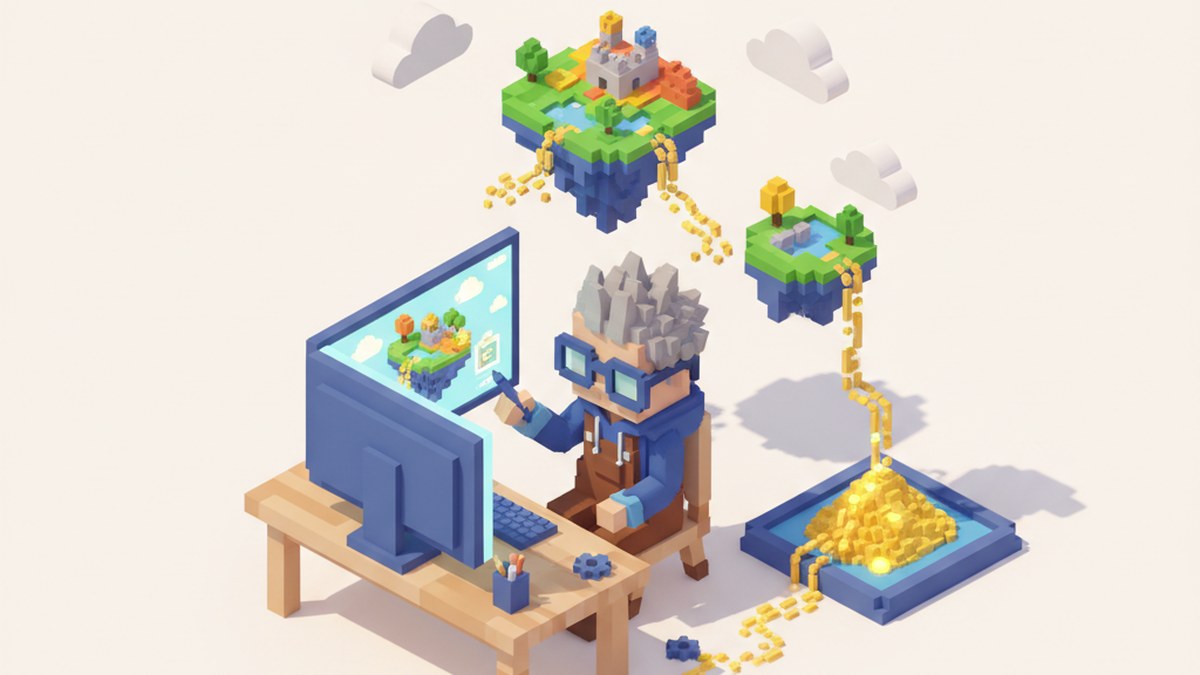
Most "how to become a Fortnite creator" guides skip the one fact that actually decides whether you make money: you can build islands all day for free, but Epic doesn't pay a cent until you clear an enrollment gate and then hit a $100 floor. Those are two different finish lines, and people conflate them constantly.
What 'becoming a Fortnite creator' really meansAnyone can publish an island for free. Getting paid means clearing Epic's 18+ enrollment rules first, then accumulating $100 in a 12-month window before any money lands.
So let me separate the two things. Making content for Fortnite is wide open: you download Unreal Editor for Fortnite (UEFN) or use in-game Creative, build a map, test it, and publish it to Discover. No application, no follower count, no fee. The moment you want Epic to send you real money, you enter the engagement payouts program, and that's where the actual requirements live.
I'll walk through the real path: how you build, the exact enrollment rules, how the money actually flows in 2026, and the catch that quietly resets people's earnings. None of it is hidden in fine print, but the guides that promise easy Fortnite money tend to leave out the gates.
Step one: build an island, for free
UEFN and Fortnite Creative cost nothing. You sign in with an Epic account, build experiences using Creative's tools or the full Unreal Editor, playtest, and publish to the Discover page. That's the open door, and it's why the first answer to "how do I become a Fortnite creator" is genuinely simple: you already can. Make something, ship it, and you're a published island creator.
The honest part is that publishing and earning sit far apart. Epic itself frames engagement payouts as compensation for the value your island brings through player engagement, not a reward for uploading. A polished map nobody returns to earns close to nothing. The building is the easy 5%. The other 95% is making an island people come back to and spend around.
There's no follower minimum gating any of this, which sets Fortnite apart from most platforms. Nobody checks your subscriber count. They measure whether real players spend time on your island. That's freeing if you're starting from zero audience, and brutal if you assumed a clever map automatically prints V-Bucks.
Step two: clear the enrollment gates
This is where the requirements bite. To enroll in engagement payouts, you have to meet all of these:
- Account age + activity: your Epic account must have been active in Fortnite for 30 days, with at least 7 of the last 30 days spent editing islands in Creative or UEFN. The alternative path: spend and redeem $73 (USD pricing) on Fortnite in-game products in the last 90 days — gift cards and V-Bucks gift card redemptions don't count toward that.
- Age: you, or the legal entity's representative, must be at least 18.
- Terms: accept the Engagement Program Payout Terms and abide by the Fortnite Developer Rules and content guidelines.
- Payments: be able to receive payouts through Hyperwallet, Epic's current payment platform, which means completing a tax interview and Hyperwallet setup as part of enrollment.
The 18+ rule is the one that surprises younger builders. You can build and publish at any age, but you cannot enroll in the payout program or receive money unless you're a legal adult. There's no workaround inside the program itself; a parent or legal entity has to be the enrolled party.
Check the exact eligibility thresholds before you enroll
See the full Fortnite enrollment rulesStep three: understand how Fortnite actually pays
Here's the money mechanic. Epic takes 40% of the net revenue from Fortnite's Item Shop and most real-money purchases each month and puts it into an Engagement Pool. That pool gets split among all island publishers (including Epic's own islands) using the Engagement Payout Formula. The formula weighs four things:
| What it measures | Why it matters |
|---|---|
| Active playtime | Time players actually spend on your island |
| Island retention | Players coming back on later days |
| Playtime around Item Shop spend | Active time within a week of a player spending V-Bucks |
| New / lapsed player rewards | You earn 75% of a brand-new or returning player's pool contributions for six months |
Notice what's missing: a fixed cents-per-play rate. There isn't one. Your payout is a share of a pool that moves with overall Fortnite spending and with how your islands rank on engagement. Epic has reported paying creators over $1 billion since UEFN launched in 2023, so the money is real. It's just distributed by engagement, and it concentrates heavily toward islands people return to.
One 2026 wrinkle worth knowing: there's a second earning stream now. In-island transactions let you sell durable and consumable items directly inside your island, and through January 31, 2027, creators keep 100% of the V-Bucks value (roughly 74% of retail after platform fees). By mid-2026, thousands of maps were earning more from these direct sales than from engagement payouts. If you're starting now, that's arguably the bigger lever than chasing the engagement pool alone.
What this means for you
If you're starting today, here's how I'd think about it. The barrier to becoming a Fortnite creator is basically zero, so don't overthink it. Open UEFN and ship an island. The barrier to getting paid is two-part: clear the enrollment gates (18+, the 30-day/7-editing-day account or the $73 spend path, Hyperwallet, tax interview), then earn enough engagement to cross $100 inside a 12-month window before the clock resets.
Two practical moves. First, lean into retention, not raw plays. The formula rewards players coming back and spending, so a map with progression, seasonal updates, or a competitive mode beats a one-and-done showcase. Bringing a brand-new or lapsed player to Fortnite through your island pays you 75% of their pool contributions for six months, which is a real reason to promote outside the game. Second, take in-island transactions seriously while the 100% V-Bucks split lasts through January 2027. For a lot of creators that's now the faster path to clearing $100 than the engagement pool.
Fortnite is one of the few platforms with no follower minimum and a free, open front door, and it pays in real money through a transparent formula. It's also honest about being a pool you share, not a salary. If you want to see how the Fortnite payout stacks up against other gaming creator programs before you commit months to an island, run the numbers in the Gemlist calculator first. It's also worth reading our breakdown of how to become a Roblox creator and whether Roblox DevEx actually pays, since the two are the obvious gaming-dev alternatives to weigh side by side.
Thinking about building your first island?
See the live Fortnite Creative / UEFN requirements, the engagement payout formula, and the $100 floor rules — then check how it compares before you commit a season to it.
Open the Fortnite Creative breakdownFrequently asked questions
How do you become a Fortnite creator and start earning in 2026?
Building is the easy part: download Unreal Editor for Fortnite (UEFN) or use in-game Creative, make an island, test it, and publish it to Discover. That's free and open. Getting paid is a separate enrollment. To join the engagement payouts program your Epic account must be at least 30 days old with at least 7 of the last 30 days spent editing in Creative or UEFN (or you've spent $73 on Fortnite in-game products in the last 90 days), you must be 18 or older, accept the Engagement Program Payout Terms, follow Epic's content guidelines, and set up Hyperwallet plus a tax interview. So becoming a creator is instant; becoming a paid creator means clearing those enrollment gates first.
What are the requirements to get paid by Fortnite Creative?
Five things. Your Epic account needs to have been active in Fortnite for 30 days with at least 7 of the last 30 including time editing islands (the alternative path is spending $73 on Fortnite in-game products in the last 90 days, excluding gift cards). You or your legal entity's representative must be at least 18. You must accept the Fortnite Developer Terms, abide by the Fortnite Developer Rules, and be able to receive payments through Hyperwallet. Then you complete a tax interview before any money moves.
How much does Fortnite pay creators?
Epic puts 40% of the net revenue from Fortnite's Item Shop and most real-money purchases into a monthly Engagement Pool, then splits it among island publishers using its Engagement Payout Formula (active playtime, island retention, playtime around Item Shop spend, and rewards for bringing in new or lapsed players). There's no fixed rate or guaranteed amount per play — your share depends on how much engagement your islands drive. Epic has reported paying creators over $1 billion since UEFN launched in 2023.
Is there a minimum payout on Fortnite Creative?
Yes — $100 USD. You don't receive anything until your accumulated payouts reach $100 within a 12-consecutive-month period. If you're also in Support-A-Creator, both programs count toward the same $100 threshold. Miss $100 over 12 months and your balance resets to zero and a new period starts, so a slow island can lose its accrued earnings.
Do you need to be 18 to monetize Fortnite islands?
Yes. Engagement payouts are only available to creators (or the legal entity's representative) who are at least 18 years old. Anyone can build and publish islands, but enrolling in the payout program and receiving money through Hyperwallet requires being a legal adult and completing a tax interview.
More from Gemlist
How Many Watch Hours to Monetize YouTube in 2026
How many watch hours to monetize YouTube in 2026: 4,000 valid public hours in 12 months plus 1,000 subs for ad revenue, or 3,000 hours at 500 subs for fan funding.
Creator Monetization Platforms 2026: Complete Guide by Category
How do creators make money in 2026? This guide covers 69 verified creator programs across 9 categories — video, streaming, music, gaming, writing, newsletter, beauty, education, and AI tools — with real payout rates and entry requirements.
How Much Does Ream Stories Take? Author Fees & Payouts (2026)
How much does Ream Stories take from authors? A flat 10% platform fee plus standard card processing (~2.9% + $0.30). Free to start. Here's the real math.