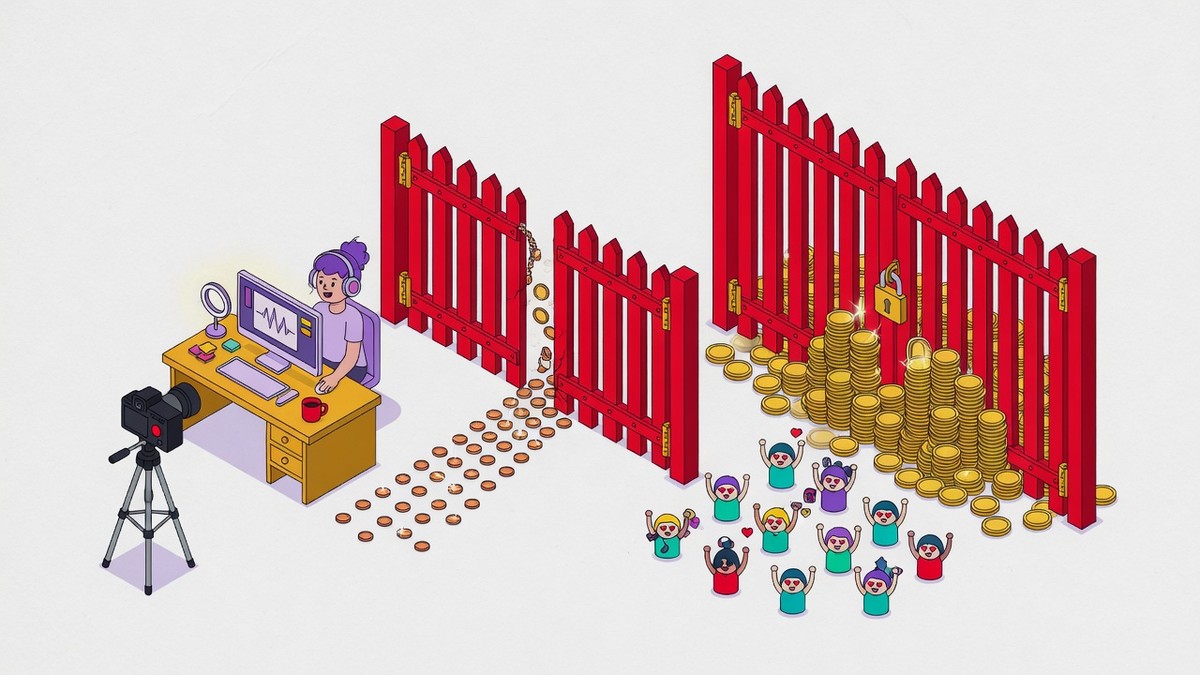
Here's the honest answer to how you join the YouTube Partner Program in 2026: there are two doors, and most people only know about one of them. The full door needs 1,000 subscribers plus either 4,000 valid public watch hours in the last 12 months or 10 million valid public Shorts views in the last 90 days. The smaller, newer door, the expanded tier in eligible countries, opens at 500 subscribers with 3 uploads in the last 90 days and either 3,000 watch hours or 3 million Shorts views.
The catch that trips people up: those two doors don't unlock the same room. Let me walk through both, what each one actually gives you, and the baseline boxes you have to tick regardless of your subscriber count.
The two doors, plainly
YouTube used to have one gate: 1,000 subscribers and 4,000 watch hours, full stop. That's still the door to the money most people care about (ad revenue), but it's no longer the only entrance.
Door one: the expanded (early-access) tier. In eligible countries, you can apply at 500 subscribers if you also have 3 valid public uploads in the last 90 days and either 3,000 valid public watch hours in the last 12 months or 3 million valid public Shorts views in the last 90 days. What this buys you is fan funding (think Super Thanks and channel memberships) plus select Shopping features. It's the "start earning from your audience before you're big" tier.
Door two: full YPP. This is the 1,000-subscriber tier, with either 4,000 valid public watch hours in the last 12 months or 10 million valid public Shorts views in the last 90 days. Clearing this one adds the parts everyone associates with "getting monetized": a share of ad revenue and YouTube Premium revenue on top of the fan-funding tools.
The requirements that have nothing to do with subscriber count
Hitting a subscriber or view threshold makes you eligible to apply. It doesn't get you in by itself. Every applicant, at either tier, has to clear the same baseline:
- Follow the YouTube channel monetization policies. This is the big one, and the one most rejections cite.
- Live in a country/region where YPP is available. If it's not offered where you are, the numbers don't matter.
- No active Community Guidelines strikes on the channel.
- 2-Step Verification turned on for your Google Account.
- Advanced features access on YouTube.
- One active AdSense for YouTube account linked to your channel (this is how you actually get paid).
None of these are hard on their own. But skip one (an unlinked AdSense account, 2-Step Verification you never enabled) and your application stalls even though your channel is "big enough."
Both eligibility tiers, the baseline checklist, and the revenue split, verified
See the YouTube Partner Program detailsLong-form or Shorts: pick your lane
The 2026 requirements give you two ways to hit each threshold, and they don't blend. For full YPP you can bring 4,000 long-form watch hours OR 10 million Shorts views. For the expanded tier, 3,000 watch hours OR 3 million Shorts views. Whichever track fits what you make.
The trap: Shorts-feed watch time does not count toward the 4,000-hour long-form threshold. If you post a mix and assume it all pools into one bucket, you can sit just under the line on both tracks and wonder why you're not eligible. Decide early whether you're chasing the watch-hours path or the Shorts-views path, and lean into that format instead of splitting the difference.
What happens after you apply
Once you cross a threshold, you apply in YouTube Studio's Earn tab. Then you wait. Every channel goes through a standard review, automated checks plus human review, to confirm you meet YouTube's policies and guidelines. Creators commonly report this takes around a month, though YouTube doesn't promise a fixed turnaround. It can be quicker or slower depending on the queue.
If you're rejected, YouTube names a reason. The common ones: the channel doesn't comply with monetization policies, there's an active Community Guidelines strike, you're in a region where YPP isn't available, 2-Step Verification isn't on, or the channel fails the standard policy review (reused or unoriginal content is a frequent flag). Fix the specific issue, wait the required window, and reapply.
What you'll actually earn, and what I won't pretend to know
Once you're in full YPP, YouTube shares 55% of ad revenue on long-form videos and 45% on Shorts, plus a cut of YouTube Premium and whatever your fans send through funding tools. That's the split. What I won't do is hand you a "beginners make $X" figure. YouTube doesn't publish per-creator RPM, and it swings wildly by niche, geography, and season. Anyone quoting you a precise beginner number is guessing. If you want to model your own case against real program data instead of a made-up average, that's what the creator earnings calculator is for.
For the payout side in depth (RPM ranges, what moves the number) I broke that down separately in how much YouTube pays creators. And if you're still fuzzy on why YPP is a "program" you qualify for rather than a "fund" you get invited to, creator fund vs creator program untangles that. YouTube sits alongside the other video creator programs worth comparing before you commit your time to one platform.
The bottom line
- Best for
- Creators building toward ad revenue who want to start earning at 500 subs via fan funding
- Pay model
- 55% of long-form ad revenue, 45% on Shorts, plus Premium + fan funding
- Access
- Two tiers: 500 subs (fan funding, eligible countries) or 1,000 subs (adds ad revenue)
Joining YPP in 2026 is more forgiving than the old 1,000-subs-only gate, as long as you understand the 500-sub door only opens fan funding, not ads. Clear the baseline checklist early (AdSense, 2-Step Verification, a clean policy record) so the review is the only thing standing between you and getting paid.
So, how do you join the YouTube Partner Program? Pick your door (500 subs for fan funding, 1,000 for the full ad-revenue package), pick your lane (watch hours or Shorts views), tick the baseline boxes, and apply. The thresholds are just the entry fee. Keeping a clean, policy-compliant channel is what actually gets you through the review.
Two doors in: see which YPP tier you qualify for
The exact 2026 thresholds for both tiers, the baseline checklist, and the ad-revenue split, verified against the live listing on Gemlist.
Check the YouTube Partner Program detailsFrequently asked questions
What are the requirements to join the YouTube Partner Program in 2026?
There are two entry tiers. Full YPP needs 1,000 subscribers plus either 4,000 valid public watch hours in the last 12 months or 10 million valid public Shorts views in the last 90 days. The expanded early-access tier (eligible countries only) needs 500 subscribers, 3 valid public uploads in the last 90 days, and either 3,000 valid public watch hours in the last 12 months or 3 million Shorts views in the last 90 days. On top of the numbers, both tiers require you to follow YouTube's channel monetization policies, live in a country where YPP is available, have no active Community Guidelines strikes, turn on 2-Step Verification, have advanced features access, and link an AdSense account.
Can you join YouTube monetization with 500 subscribers?
Yes, but only for part of it. In eligible countries, the expanded YPP lets you apply at 500 subscribers with 3 uploads in the last 90 days and either 3,000 watch hours in the last 12 months or 3 million Shorts views in 90 days. That unlocks fan-funding features (Super Thanks, channel memberships) and select Shopping. It does not include ad revenue. Ad-revenue sharing still requires the full 1,000-subscriber tier. So 500 subs gets you a door, not the whole house.
Do Shorts count toward YouTube monetization?
Yes, on their own track. You can qualify for full YPP with 10 million valid public Shorts views in the last 90 days instead of 4,000 long-form watch hours, and for the expanded tier with 3 million Shorts views instead of 3,000 hours. But the two don't mix: Shorts-feed watch time does not count toward the 4,000-hour long-form threshold. Pick the lane that matches what you actually make.
How long does YouTube Partner Program approval take?
Once you hit a threshold and apply in YouTube Studio, every channel goes through a standard human and automated review to confirm it meets YouTube's policies. Creators commonly report it takes around a month, though it can be faster or slower depending on the queue and your channel. YouTube doesn't guarantee a fixed turnaround, so plan for weeks, not hours, and don't panic if it isn't instant.
Why do people get rejected from the YouTube Partner Program?
The usual reasons: the channel doesn't comply with YouTube's channel monetization policies, there's an active Community Guidelines strike, the channel is in a country/region where YPP isn't available, 2-Step Verification isn't enabled on the Google Account, or the channel simply fails the standard policy review. Reused or unoriginal content is a frequent flag. Fix the specific issue YouTube names and you can reapply.
More from Gemlist
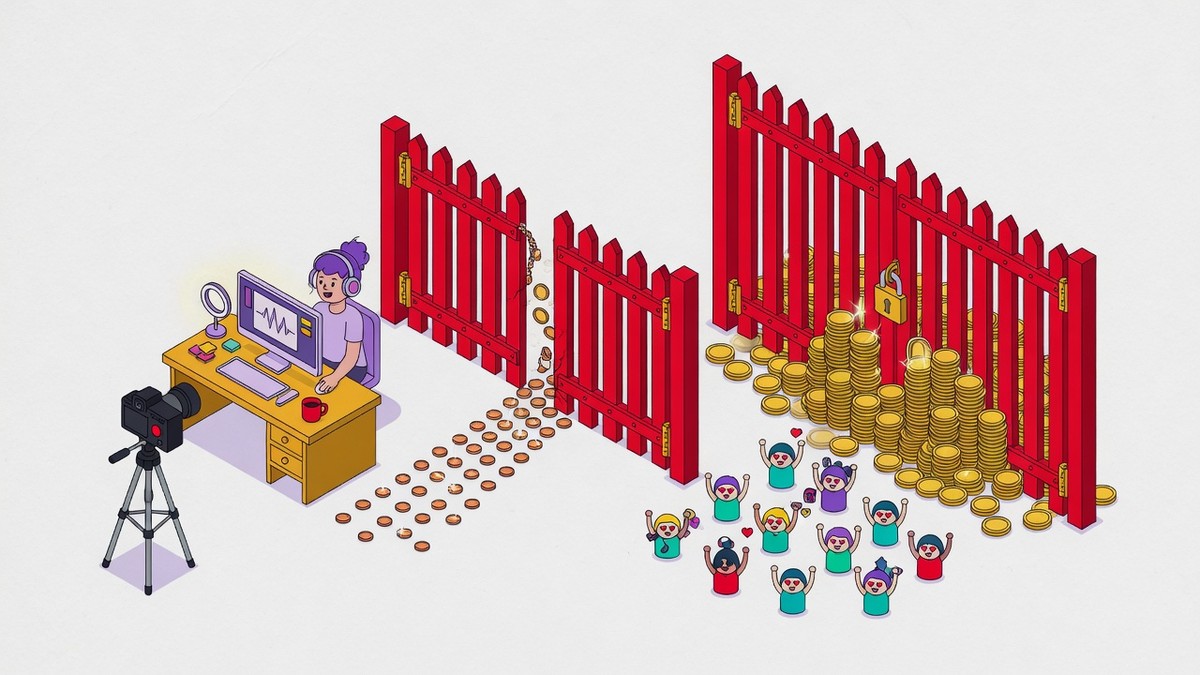
How Many Watch Hours to Monetize YouTube in 2026
How many watch hours to monetize YouTube in 2026: 4,000 valid public hours in 12 months plus 1,000 subs for ad revenue, or 3,000 hours at 500 subs for fan funding.
Spotify Partner Program Requirements 2026: Who Actually Qualifies
Spotify Partner Program requirements 2026: 3 episodes, 2,000 consumption hours, and 1,000 audience count in 30 days. Spotify cut the bar ~80% in January. Full breakdown.
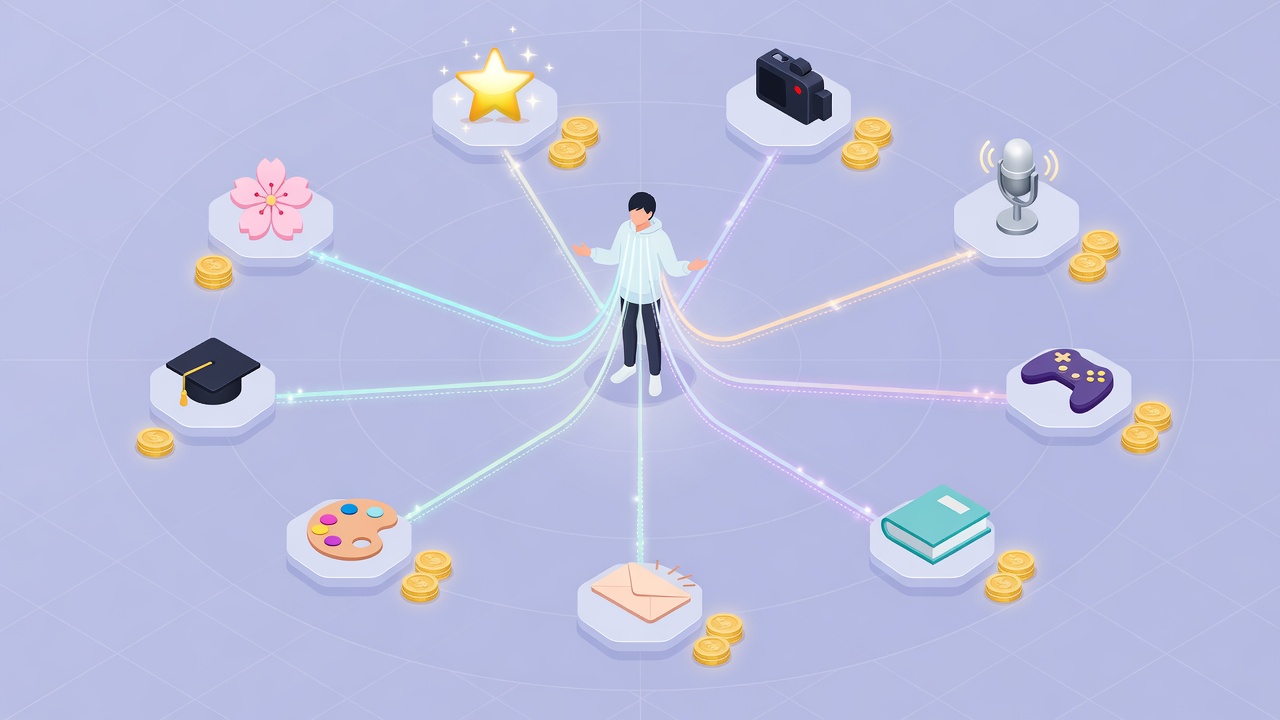
Creator Monetization Platforms 2026: Complete Guide by Category
How do creators make money in 2026? This guide covers 69 verified creator programs across 9 categories — video, streaming, music, gaming, writing, newsletter, beauty, education, and AI tools — with real payout rates and entry requirements.